255 books read. These are the ten that move your business forward.
I read 255 books on business, marketing and selling. Ten of them I recommend to every entrepreneur and marketer, and under each one you’ll see where I applied it myself.

Playing to Win (Lafley and Martin)
This book forces you to choose: where do you play, and why do you win there? That’s why I start every assignment with the market and the choice of segments, and only think about channels afterwards. At Center for Creative Leadership I chose the markets we invested in, so the budget went to the markets with the most potential.

Traction (Weinberg and Mares)
Weinberg and Mares show how to test channels one at a time, instead of starting everywhere at once. I do the same. For each channel I check what produces leads and what actually turns into commercial opportunities. Then I shift the budget.

Scientific Advertising (Hopkins)
Claude Hopkins wrote this in 1923, and it reads as if it were written yesterday. Measure what works and drop the rest. I work with Google Analytics and Tag Manager and build my own dashboards in Looker Studio.

The Lean Startup (Ries)
At Garçon we sold our QR menu to hospitality businesses with a single cold email: “We’ve digitised your menu”. Whoever replied immediately saw their own menu. That brought in customers, but we never found product-market fit, so we stopped. I take that lesson into every assignment: I start with your sales people and your numbers.

Ready, Fire, Aim (Masterson)
Masterson describes how a company grows from nothing to a hundred million dollars. In the early phase you mainly have to sell and adjust, instead of thinking everything through first. I recognise that from Opcafegaan.be and Garçon, where we grew from zero to 700,000 visits a year and from an idea to 100 paying customers.
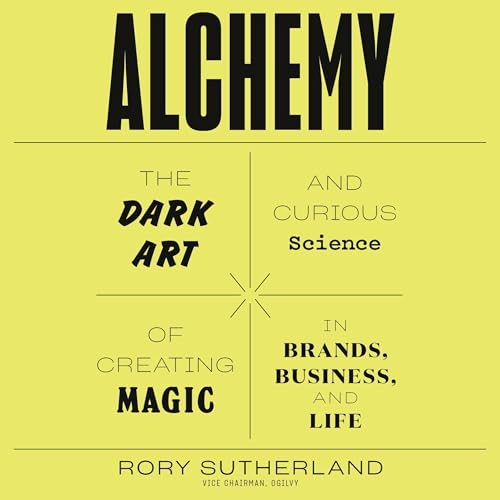
Alchemy (Sutherland)
Rory Sutherland shows that people don’t decide like a calculator, and that a small change in how you present something can do more than a bigger budget. I saw that at the NCOI stand at the VOV fair. Every form of training became a coffee blend (“What’s your ideal learning blend?”), and it became the most visited stand at the fair.

Building a StoryBrand (Miller)
Donald Miller puts the customer in the lead role and you in the role of guide, with a clear plan and one clear call to action. My site is built that way too. It starts with the customer’s situation (“You’re growing, but you don’t have a marketing manager”), shows how an assignment starts and ends with one button: book an introduction.

Buy-In (Kotter)
A good plan often dies of internal resistance. Kotter describes how good ideas get shot down and how to prevent that. That’s why I like to build marketing and sales around one shared list of target accounts, with one agenda and one calendar. People who see the same plan pull in the same direction.

Build (Fadell)
Tony Fadell built the iPod and Nest and wrote down what he learned about making products and leading teams. That ties in with my four years as product owner of the development team behind Opcafegaan.be and Garçon, in Scrum.

Pitch Anything (Klaff)
Klaff says that in every conversation the strongest frame wins. Whoever decides first what it’s about steers the rest. I recognise that in what I did. We didn’t sell Garçon with a sales pitch, but with an email you replied to and then saw your own menu. A DJ at a training day for project managers broke the picture you have of such a day. And every assignment with me starts with the same frame: in week three you get one page with what I would stop, what comes first and what it costs.
Want to know what this means for your marketing? Book an introduction.